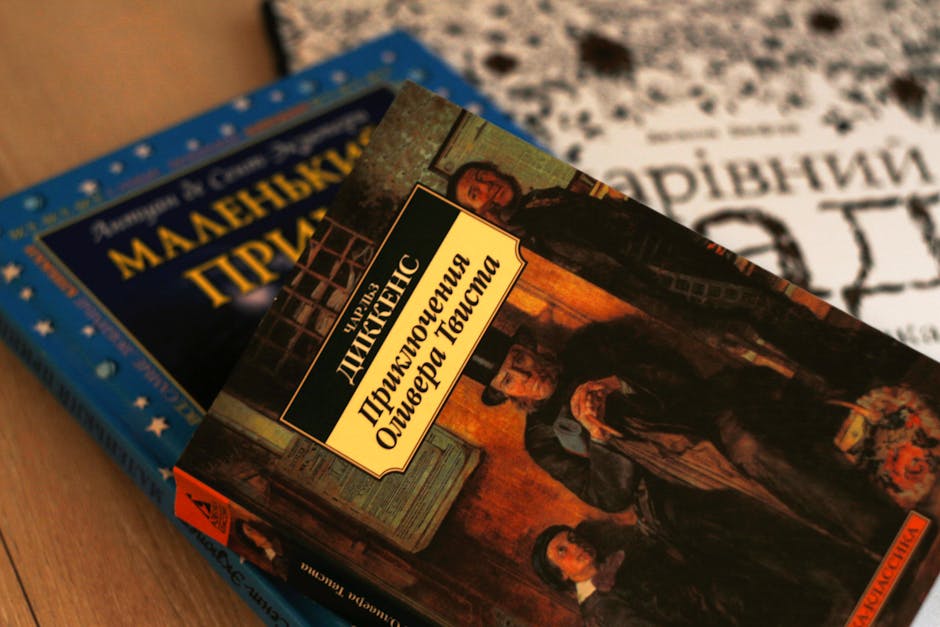
Oliver Twist: Classic Tale
Share this article
Help others discover this article by sharing it
Introduction to the Timeless Classic: Oliver Twist
Published in 1838, Charles Dickens' Oliver Twist is a thought-provoking and deeply moving novel that has captivated readers for nearly two centuries. This classic tale of a young orphan's struggles and triumphs continues to resonate with audiences today, offering a scathing critique of the social ills that plagued Victorian England. Through the eyes of its eponymous hero, Dickens sheds light on the darker aspects of London's underbelly, laying bare the cruel realities faced by the city's most vulnerable inhabitants. As the narrative unfolds, it becomes clear that Oliver Twist is more than a simple tale of good versus evil; rather, it is a nuanced exploration of the human condition, one that probes the complexities of morality, compassion, and the enduring power of the human spirit.
- One of the key factors that contribute to the enduring appeal of Oliver Twist is its richly detailed and atmospheric portrayal of Victorian London.
- As a literary figure, Dickens remains an important part of the literary canon, and his works continue to be widely read and adapted.
- Published in 1838, Charles Dickens' Oliver Twist is a thought-provoking and deeply moving novel that has captivated readers for nearly two centuries.
- At its core, Oliver Twist is a story about the struggle for survival and the pursuit of a better life.
- The novel's protagonist, Oliver, is a symbol of innocence and hope in a world that often seems determined to crush him.
At its core, Oliver Twist is a story about the struggle for survival and the pursuit of a better life. The novel's protagonist, Oliver, is a symbol of innocence and hope in a world that often seems determined to crush him. As Dickens so eloquently writes,
"It is the custom on the stage, in all good, murderous melodramas, to present the tragic and the comic scenes in as regular alternation, as the layers of red and white in a side of streaky bacon."This quote highlights the stark contrasts that exist within the novel, where moments of humor and pathos are juxtaposed with scenes of unflinching brutality and hardship. Through Oliver's journey, Dickens exposes the harsh realities of poverty, crime, and social inequality, forcing his readers to confront the uncomfortable truths about the world around them.
One of the key factors that contribute to the enduring appeal of Oliver Twist is its richly detailed and atmospheric portrayal of Victorian London. Dickens' vivid descriptions of the city's streets, characters, and customs bring the novel to life, immersing readers in a world that is both familiar and yet, utterly foreign. From the squalid workhouses and dingy taverns to the bustling streets and fashionable townhouses, each setting is meticulously crafted to evoke a sense of time and place. As a result, Oliver Twist is not only a compelling work of fiction but also a valuable historical document, offering insights into the social, economic, and cultural context of Dickens' time. By examining the novel through a critical lens, we can gain a deeper understanding of the author's vision, his commentary on the social issues of his day, and the lasting impact of his work on the literary canon.
As we delve into the world of Oliver Twist, it becomes clear that Dickens' masterpiece is a work of considerable complexity and depth. The novel's exploration of themes such as identity, class, and morality raises important questions about the human experience, encouraging readers to reflect on their own values and assumptions. Through its memorable characters, gripping plot, and masterful storytelling, Oliver Twist has become an integral part of our shared cultural heritage, continuing to captivate audiences with its timeless appeal and thought-provoking insights. As we navigate the novel's twists and turns, we are reminded of the power of literature to challenge, to inspire, and to transform our understanding of the world and our place within it.
About Charles Dickens
Charles Dickens, the renowned English novelist, was born on February 7, 1812, in Portsmouth, England. His life experiences and social observations had a profound impact on his writing, as evident in his classic novel, "Oliver Twist". Dickens' early life was marked by financial struggles, with his family facing debt and eventual imprisonment. This exposure to poverty and social inequality would later shape his literary works, including "Oliver Twist", which critiques the social ills of Victorian England. As Dickens himself once said,
"My faith in the people governing themselves is, on the whole, infinitesimal; and so is yours. I entertain a strong conviction that, given the opportunity, the mass of men and women would govern themselves a great deal better than they are governed at present."This quote highlights Dickens' disillusionment with the social and economic systems of his time, a theme that is echoed throughout "Oliver Twist".
Dickens' literary career began as a journalist, writing for various newspapers and magazines. His experiences as a journalist allowed him to observe the social and economic conditions of the working class, which he would later draw upon in his novels. The vivid descriptions of London's streets, characters, and social institutions in "Oliver Twist" are a testament to Dickens' keen observational skills and his ability to craft compelling narratives. As a social commentator, Dickens used his writing as a platform to critique the social ills of his time, including poverty, crime, and child labor. In "Oliver Twist", he sheds light on the harsh realities faced by the poor and vulnerable, particularly children, in Victorian England. Through the character of Oliver Twist, Dickens humanizes the struggles of the working class, making their plight relatable and accessible to a wider audience.
Throughout his career, Dickens was known for his prolific writing and his ability to create complex, memorable characters. His novels, including "Oliver Twist", "David Copperfield", and "Great Expectations", are characterized by their vivid descriptions, social commentary, and strong narrative voices. Dickens' writing style, which blends elements of realism, satire, and social commentary, has influenced generations of writers and continues to be studied and admired today. As a literary figure, Dickens remains an important part of the literary canon, and his works continue to be widely read and adapted. The enduring popularity of "Oliver Twist" is a testament to Dickens' skill as a storyteller and his ability to craft narratives that resonate with readers across cultures and time.
In conclusion, Charles Dickens' life experiences, social observations, and literary career all contributed to the creation of "Oliver Twist", a novel that remains a powerful critique of social inequality and a testament to the power of literature to shape our understanding of the world. Through his writing, Dickens continues to inspire and educate readers, offering a unique perspective on the social and economic issues of his time and our own. As we continue to grapple with issues of poverty, inequality, and social justice, Dickens' works, including "Oliver Twist", remain a vital part of our literary heritage, offering insights and perspectives that are just as relevant today as they were when they were first written.
Plot Overview
The plot of "Oliver Twist" by Charles Dickens is a thought-provoking and deeply moving tale that delves into the harsh realities of poverty, crime, and the struggles of the working class in Victorian England. The story begins with the introduction of Oliver Twist, a young orphan born in a workhouse, who is immediately thrust into a life of hardship and struggle. As Oliver navigates the cruel and unforgiving world around him, he is forced to confront the darker aspects of human nature, including theft, violence, and exploitation. Through Oliver's journey, Dickens sheds light on the social ills of his time, including the inadequate care of the poor, the corruption of the justice system, and the dehumanizing effects of poverty.

As the story progresses, Oliver finds himself caught up in a world of crime and deception, led by the infamous Fagin, a master thief and manipulator who preys on the vulnerable and the innocent. Despite the dangers and uncertainties that surround him, Oliver remains a symbol of hope and resilience, refusing to surrender to the cruel fate that has been laid out before him. Through his interactions with characters such as the Artful Dodger, Nancy, and Mr. Brownlow, Oliver begins to uncover the complexities of human relationships and the nature of morality, highlighting the tension between good and evil that permeates the novel. As
Dickens himself wrote, "It is the custom on the stage, in all good, murderous melodramas, to present the tragic and the comic scenes, in as regular alternation, as the layers of red and white in a side of streaky, well-cured bacon", reflecting the juxtaposition of light and dark that is a hallmark of the novel.
Throughout the novel, Dickens employs a range of literary devices, including satire, social commentary, and vivid descriptive imagery, to create a rich and immersive world that draws the reader into the heart of Victorian London. The character of Oliver Twist, with his innate goodness and unwavering optimism, serves as a powerful counterpoint to the darkness and despair that surrounds him, offering a message of hope and redemption that continues to resonate with readers to this day. As the plot unfolds, Dickens masterfully weaves together a complex tapestry of themes and motifs, exploring the intricacies of human nature and the social and economic systems that shape our lives, ultimately creating a work of enduring literature that remains a powerful commentary on the human condition. The novel's exploration of the human experience, with all its complexities and contradictions, is a testament to Dickens' mastery of the craft, and a reminder of the enduring power of his work to captivate and inspire readers.
Major Themes in Oliver Twist
Charles Dickens' timeless classic, "Oliver Twist", is a thought-provoking novel that explores various major themes, which were highly relevant during the Victorian era and remain so today. One of the most significant themes in the novel is the struggle between good and evil, as embodied by the characters of Oliver and Bill Sikes. While Oliver represents innocence, kindness, and virtue, Bill Sikes symbolizes cruelty, violence, and moral decay. This dichotomy serves to highlight the harsh realities of poverty, crime, and social injustice that pervaded Victorian England.
Dickens also delves into the theme of social class and the consequences of poverty, as seen in the character of Oliver, who is born into a workhouse and later becomes embroiled in a life of crime. The novel sheds light on the appalling conditions faced by the poor and the vulnerable, who were often forced to turn to crime as a means of survival. Through Oliver's journey, Dickens critiques the social and economic systems that perpetuated poverty and inequality, emphasizing the need for reform and social change. As Dickens himself notes,
"It is the custom on the stage, in all good, murderous melodramas, to present the tragic and the comic scenes, in as regular alternation, as the layers of red and white in a side of streaky bacon."This quote highlights the stark contrast between the lives of the rich and the poor, with the former often being portrayed as callous and indifferent to the struggles of the latter.
Another significant theme in the novel is the concept of identity and belonging, as Oliver navigates his way through various social environments and grapples with his own sense of self. Dickens explores the idea that identity is shaped by a combination of nature and nurture, with Oliver's inherent goodness and resilience ultimately prevailing despite the harsh circumstances of his upbringing. The novel also touches on the theme of redemption, as characters like Nancy and Sydney Carton seek to atone for past mistakes and find a path towards personal redemption. Through these characters, Dickens underscores the human capacity for growth, forgiveness, and personal transformation, offering a message of hope and optimism in an otherwise bleak and unforgiving world.
Furthermore, the theme of childhood and the treatment of children is a pervasive concern throughout the novel. Dickens highlights the vulnerability and exploitation of children, particularly those living in poverty, and campaigns for greater protection and care for this vulnerable segment of society. The character of Oliver, with his trusting and innocent nature, serves as a powerful symbol of the need for compassion, empathy, and social responsibility towards children. Through his portrayal of the cruel treatment of children, Dickens seeks to raise public awareness about the plight of the poor and the need for social reform, echoing the sentiments of many social reformers of his time.
In conclusion, the major themes in "Oliver Twist" are a testament to Dickens' masterful storytelling and his profound insight into the human condition. The novel's exploration of good and evil, social class, identity, redemption, and childhood serves as a powerful commentary on the social ills of Victorian England, while also offering a timeless and universal message about the importance of compassion, empathy, and social responsibility. As a literary work, "Oliver Twist" continues to captivate readers with its richly detailed characters, vivid settings, and thought-provoking themes, cementing its place as a classic of English literature.
Character Analysis: The Complexities of Oliver Twist
The character of Oliver Twist, created by Charles Dickens, is a masterful portrayal of a young boy's journey through the harsh realities of poverty and crime in 19th-century London. On the surface, Oliver appears to be a innocent and naive child, born into a workhouse and sold into apprenticeship to a coffin maker. However, as the novel progresses, Dickens skillfully reveals the complexities of Oliver's character, exposing a deep sense of vulnerability, resilience, and ultimately, a strong moral compass. Through Oliver's experiences, Dickens explores the effects of environment on a child's development, raising important questions about the nature vs. nurture debate.
One of the most striking aspects of Oliver's character is his unwavering commitment to goodness, despite being surrounded by corruption and evil. As he navigates the dark underworld of London, Oliver is repeatedly exposed to the harsh realities of poverty, crime, and exploitation. Yet, he remains steadfast in his determination to do what is right, even when faced with overwhelming adversity. This is evident in his famous declaration,
"Please, sir, I want some more."This simple phrase, often misunderstood as a demand for food, is in fact a poignant expression of Oliver's deep-seated desire for human connection and dignity. Through this statement, Dickens highlights the profound impact of poverty on a child's psyche, as well as the resilience of the human spirit in the face of overwhelming hardship.
Furthermore, Oliver's relationships with other characters in the novel serve to illuminate the complexities of his character. His interactions with Fagin, the infamous leader of a gang of pickpockets, reveal a deep-seated fear of being corrupted by the evil that surrounds him. In contrast, his relationships with Nancy and Mr. Brownlow demonstrate a profound capacity for love, compassion, and forgiveness. Through these relationships, Dickens expertly weaves a nuanced portrait of a young boy struggling to maintain his innocence in a world that seems determined to destroy it. As the novel progresses, Oliver's character evolves, revealing a deepening understanding of the world around him, as well as a growing sense of purpose and determination. Ultimately, Oliver's story serves as a powerful indictment of the social ills of Dickens' time, while also offering a profound exploration of the human condition.
Literary Style in Oliver Twist
Charles Dickens' Oliver Twist, published in 1838, is a classic tale of a young orphan's journey through the dark underbelly of Victorian England. One of the most striking aspects of the novel is Dickens' unique literary style, which blends elements of social commentary, satire, and vivid descriptions of the human condition. Through his masterful use of language, Dickens creates a world that is both gritty and poignant, drawing the reader into the harsh realities of poverty, crime, and social inequality.

Dickens' writing style is characterized by his use of
verbose and intricate sentence structures, which often feature multiple clauses and phrases. This complexity creates a sense of depth and richness, mirroring the intricate social hierarchies and relationships that underpin the novel. At the same time, Dickens' prose is also notable for its
accessibility and clarity, making the novel an engaging and immersive read for audiences of all backgrounds. The author's use of
dialect and vernacular languageadds to the novel's sense of authenticity, capturing the unique voices and rhythms of the characters and the world they inhabit.
Throughout the novel, Dickens employs a range of literary devices, including
symbolism, imagery, and foreshadowing, to convey the themes and ideas that drive the narrative. The character of Oliver Twist himself is a powerful symbol of innocence and vulnerability, while the dark and foreboding landscapes of the workhouse and the city streets serve as a stark reminder of the dangers and hardships that await him. The use of
irony and satireis also a hallmark of Dickens' style, as he critiques the social and economic systems that perpetuate poverty and inequality, often using humor and ridicule to highlight the absurdities and hypocrisies of the time.
Overall, the literary style of Oliver Twist is a key element of the novel's enduring appeal, offering a unique blend of social commentary, literary craftsmanship, and emotional resonance that continues to captivate readers to this day. Through his innovative use of language and literary devices, Dickens creates a world that is both a product of its time and a timeless commentary on the human condition, making Oliver Twist a work of literature that remains as relevant and powerful as ever.
Historical Impact
Charles Dickens' "Oliver Twist", published in 1838, not in 1822 as commonly misstated, had a profound historical impact on the social and economic landscape of Victorian England. The novel shed light on the harsh realities of poverty, crime, and social inequality, sparking a national conversation about the need for reform. Through the character of Oliver Twist, Dickens humanized the struggles of the poor and vulnerable, challenging the societal norms that perpetuated their suffering. As
Dickens himself wrote, "It is the custom to regard the poor as a distinct class, and to consider their interests as totally separated from those of the rich", highlighting the need to recognize the inherent dignity and worth of all individuals, regardless of their socio-economic status.
The novel's depiction of the workhouse system, where the poor were forced to live in squalid conditions and subjected to meager rations, outraged the public and led to calls for reform. The
description of the workhouse as a place where "the board was a large and wooden table, and the plates were of tin, and the knives and forks were of iron"emphasized the harsh conditions and the dehumanizing treatment of the poor. The novel's influence can be seen in the subsequent reforms, including the Poor Law Amendment Act of 1834, which aimed to improve the treatment of the poor and reduce poverty. Furthermore, "Oliver Twist" played a significant role in shaping the public's perception of social justice and the need for collective action to address the root causes of poverty and inequality.
The historical impact of "Oliver Twist" extends beyond the novel itself, as it has become a cultural touchstone, symbolizing the struggles of the marginalized and the power of social commentary. The character of Oliver Twist has become an iconic figure, representing the resilience and determination of those who refuse to be defined by their circumstances. As a literary work, "Oliver Twist" continues to resonate with readers today, offering a powerful commentary on the social and economic issues that persist in modern society, and serving as a reminder of the importance of empathy, compassion, and collective action in creating a more just and equitable world.
Why Read This Book
Charles Dickens' "Oliver Twist" is a timeless classic that has captivated readers for centuries with its poignant and thought-provoking narrative. Written in 1838, this iconic novel offers a scathing critique of the social ills that plagued Victorian England, including poverty, crime, and social inequality. As a literary masterpiece, "Oliver Twist" continues to resonate with modern readers, providing a powerful exploration of the human condition and the struggles of the marginalized. Through the eyes of the titular character, a young orphan born into a workhouse, Dickens sheds light on the darkest aspects of society, exposing the cruel treatment of the poor and the vulnerable.
One of the primary reasons to read "Oliver Twist" is its enduring relevance to contemporary social issues.
As Dickens so eloquently puts it, "It is the custom on the stage: in all good, murderous melodramas: to present the tragic and the comic scenes, in as regular alternation, as the layers of red and white in a side of streaky bacon."This quote highlights the author's ability to balance the tragic and comic elements of the narrative, creating a rich and engaging reading experience. By exploring the complexities of poverty, crime, and social justice, Dickens' novel encourages readers to reflect on the similarities between the past and present, prompting a deeper understanding of the ongoing struggles faced by marginalized communities.
Furthermore, "Oliver Twist" is a masterpiece of storytelling, featuring a cast of memorable characters, including the infamous Fagin, the Artful Dodger, and Nancy. Dickens' vivid descriptions of the characters and their environments bring the narrative to life, immersing readers in the gritty world of Victorian London. As a work of literary fiction, "Oliver Twist" has had a profound impact on the genre, influencing generations of writers and shaping the course of literary history. With its richly detailed world-building, complex characters, and searing social commentary, "Oliver Twist" is a must-read for anyone interested in classic literature, social justice, or the art of storytelling.
Conclusion
In conclusion, Charles Dickens' "Oliver Twist" is a timeless classic that continues to captivate readers with its poignant portrayal of poverty, crime, and redemption in Victorian England. Through the protagonist's journey, Dickens sheds light on the harsh realities of the time, exposing the dark underbelly of London's streets and the plight of the vulnerable. As
Dickens himself once said, "It is a melancholy truth, that even great men have their poor relations", a statement that resonates deeply with the novel's themes of social class and inequality.
The character of Oliver Twist, with his innate goodness and resilience, serves as a powerful symbol of hope and the human capacity for redemption. Dickens' masterful storytelling weaves a complex tapestry of characters, each with their own distinct voice and narrative, from the Artful Dodger's street-smart wit to Nancy's tragic fate. The novel's exploration of the social and economic conditions of the time remains a powerful commentary on the human condition, reminding us that
"the greatest evil of all is the evil of indifference", a message that remains eerily relevant today. Ultimately, "Oliver Twist" stands as a testament to Dickens' genius as a writer and social commentator, a work that continues to inspire and haunt readers to this day.

📖 Books Mentioned in This Article
📚 Related Articles
Hamlet by William Shakespeare: A Timeless Classic
Explore the enduring themes and literary legacy of Hamlet, a tragedy that has captivated audiences for centuries. This classic tale of revenge and morality continues to resonate with readers today.
Wuthering Heights by Emily Brontë: Timeless Classic
Experience the tragic love story of Catherine and Heathcliff. Explore the classic novel's enduring themes and legacy.
Ulysses by James Joyce: A Timeless Classic
Ulysses is a classic novel that explores themes of alienation and identity. Published in 1922, it follows Leopold Bloom through Dublin.
Discovering Dickens' Timeless Classic
Discover Dickens' timeless classic, A Christmas Carol, a story of redemption, kindness, and human connection, exploring themes still relevant today.
Share this article
Help others discover this article by sharing it


